Creator Program:Earn $3 per subscriber you refer.Fast payouts, instant approval.

Science & Space YouTube Thumbnails: Examples, Ideas & What Actually Works (2026)

Science & Space YouTube thumbnails: examples, ideas and the packaging patterns that earn clicks in the science niche. VisualKit is a science thumbnail maker that applies these patterns to your video idea.

What makes a good science YouTube thumbnail?

Science & Space YouTube thumbnail ideas

How to make science thumbnails

  1. Describe the video, for example: Make a space thumbnail about the object we can't explain — one body against black, scale marker beside it.
  2. VisualKit generates 1280×720 options using science packaging patterns.
  3. Edit any option by typing the change you want, then export.
All 39 niches

Science & Space YouTube thumbnailsthat actually get clicked

Science and space channels have a problem most niches would envy and none would want: their subject matter is genuinely spectacular, and so is everyone else's. A nebula is beautiful in every thumbnail on the page. What separates the channels that grow is that they stop selling beauty and start selling scale, anomaly, or a question — the three things a picture of space can't do on its own. This is also the niche where generated imagery earns its keep, because the thing being explained frequently has never been photographed.

Free generations on signup · Patterns reviewed

What makes a good science or space YouTube thumbnail?

Scale, isolation, or an anomaly — beauty alone isn't a hook because every thumbnail in the niche is beautiful. The strongest pattern is a correctly proportioned size comparison with a familiar object in frame. Failing that, isolate one subject against black, or show something visibly irregular that the viewer wants explained. Keep the color and the claim sober; this audience treats exaggeration as a quality signal in the wrong direction.

  • 01Scale comparison is the niche's strongest single device
  • 02One object against black
  • 03The anomaly beats the beauty

What works in science thumbnails

Patterns that repeat across the science channels that are growing — and the mistakes sitting next to them in the same feed.

01

Scale comparison is the niche's strongest single device

Two objects in one frame, correctly proportioned, with the familiar one small: a city beside a crater, Earth beside a gas giant, a person beside a rocket's engine bell. It converts an abstract number into a physical shock the viewer feels before reading anything. Almost every breakout science thumbnail is doing some version of this, and it works because comprehension itself is the payoff the video promises.

02

One object against black

Space content wins on isolation. A single body — planet, craft, structure — centered against empty black, lit from one side, reads at any size and looks expensive. Busy star fields, lens flares and multi-object composites lose their subject at sidebar scale, which is where most of your impressions actually happen.

03

The anomaly beats the beauty

A perfect astrophotography image is decoration; the same image with one thing visibly wrong is a question. A gap in a ring, a dark patch that shouldn't be there, an orbit that doubles back, a structure with no explanation. The viewer's eye finds the irregularity and the click is the only way to resolve it — beauty alone gives them nothing to resolve.

04

Diagrams outperform photos for physics and engineering

For mechanism content — how an engine works, why a material fails, what a force does — a clean cutaway or a two-state diagram beats any photograph, because it shows the thing the video will explain. Keep it to one mechanism with one labelled part. Engineering channels that treat the diagram as the hero, not as a supporting graphic, hold up far better in a crowded sidebar.

05

Restraint signals accuracy

This audience is fluent enough to spot exaggeration, and it punishes it. Neon-saturated planets, impossible orbital geometry and clickbait phrasing like "SCIENTISTS TERRIFIED" pull a lower-quality click and cost you the viewers who subscribe. Sober color, real proportions and a specific claim signal that the video is worth twenty minutes.

06

Generated imagery is legitimate here — if it's honest

Much of what these channels cover has no photograph: an exoplanet's surface, a probe mid-manoeuvre, a structure at a scale no camera has captured. Rendered and generated visuals are the niche's native solution, and viewers accept them readily. What breaks trust is passing a render off as an observation — keeping the register clearly illustrative, rather than mimicking telescope data, is the line that matters.

Longer version: the full science thumbnail guide.

Science & Space thumbnail ideas

Concept starters for your next upload. Each one already works as a prompt — copy a line into VisualKit and it will generate from it.

  1. 01A familiar city silhouette dropped beside the object at true scale
  2. 02One planet or craft isolated against black, lit hard from a single side
  3. 03A ring system with one visible gap, nothing else in frame
  4. 04A cutaway of one mechanism with a single part highlighted
  5. 05Two states side by side — before the failure and after, same angle
  6. 06An orbital path drawn as a single line that does something unexpected
  7. 07A size ruler laid against the object, one figure stamped at the end
  8. 08A telescope image with one region boxed and magnified as an inset
Science & Space workflow

How to make Science & Space thumbnails

Three steps from a science video idea to an upload-ready 1280×720 thumbnail.

01STEP 1: CREATE

Describe the video

Type the science video idea in plain language. VisualKit generates 1280×720 options built on the packaging patterns above.

Built for science thumbnails
Upload-ready 1280×720 output
Start from a title, hook, or rough idea
Live previewCreate
Prompt
Make a space thumbnail about the object we can't explain — one body against black, scale marker beside it.
Pick your favorite16:9 · YouTube
Each option gets a score for how likely it is to get clicked.
02STEP 2: REMIX

Remix a reference

Paste a science thumbnail that worked and rebuild it around your video, your subject, and your channel's look.

Keep the structure, change the story
Test a second hook
Stay readable at 168 pixels
Live previewRemix
youtube.com/watch?v=dQw4w9W...
Original
Original thumbnail style reference
RecreatedAI
Recreated version matches style
Detected style
Bold TextDark BGClose-upHigh Contrast
03STEP 3: IMPROVE

Fix it by typing

Say what should change — bigger text, different background, remove an element — and export when it reads at feed size.

Edit with plain language
Compare variants side by side
Download without resizing
Live previewImprove
Edit
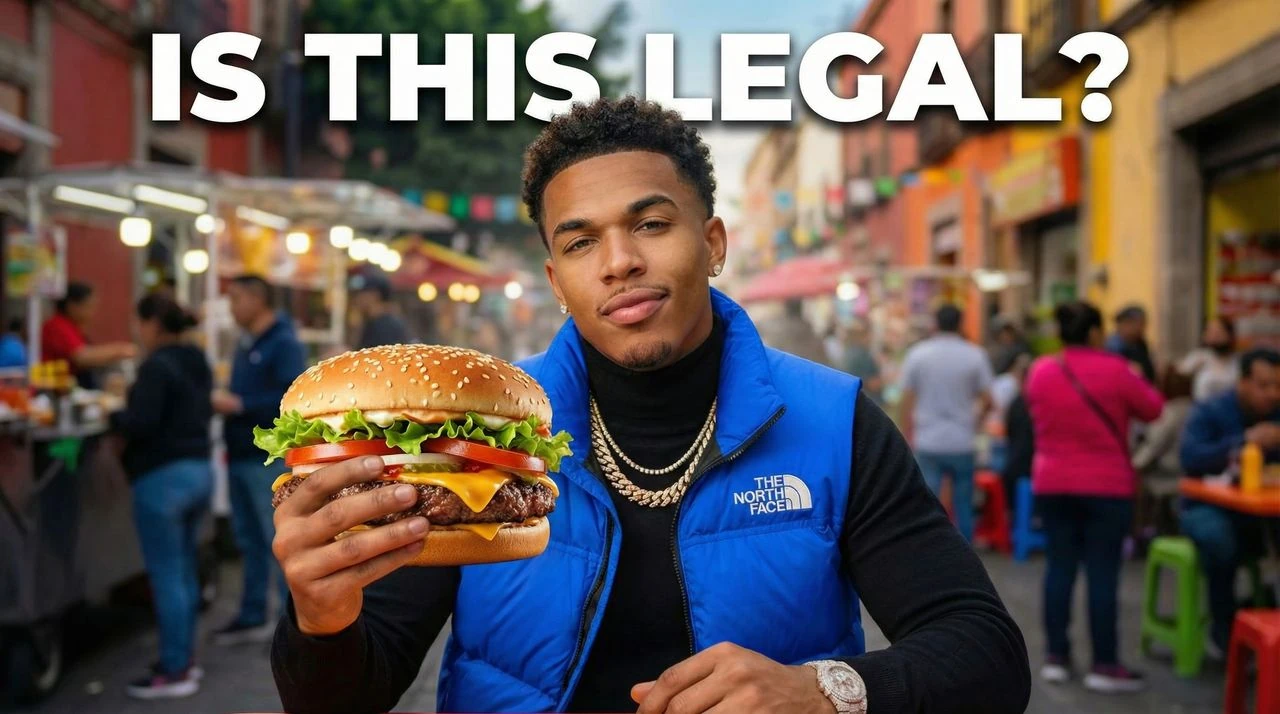
Make the vest blue, replace taco with hamburger
Drag to compare
After improvements resolved
Original thumbnail baseline draft
Before
After
Vest color -> blueTaco -> hamburgerContrast +18%

Make science thumbnails with AI

VisualKit is a science thumbnail maker built on these exact patterns. Describe the video, get 1280×720 options in about a minute, then change anything by typing what you want different.

Free generations on signup · plans from $40/month

Try this prompt

"Make a space thumbnail about the object we can't explain — one body against black, scale marker beside it."

Choose your plan

Simple Pricing

Join 25,000+ creators making thumbnails that get clicks.

Starter

$20/mo

For creators posting consistently every month.

Includes:

  • Up to 50 thumbnails / month
  • Templates from top creators in your niche
Most Popular

Pro

$40/mo

For creators publishing several times a week.

Everything in Starter, plus:

  • Up to 150 thumbnails / month
  • Never miss a publish day

Ultra

🚀
$80/mo

For high-volume creators and teams.

Everything in Starter, plus:

  • Up to 400 thumbnails / month
  • Lowest cost per thumbnail for daily publishing

All plans include thumbnails, social content, app icons & logo creation.

Existing legacy subscribers keep their retired price while their subscription stays active. Canceling or switching plans moves future checkout to current public pricing.

Secure payment via LemonSqueezy. VAT calculated at checkout.

Science & Space FAQ

More science thumbnail questions

It's the niche's native solution, because most of what these videos cover has never been photographed — exoplanet surfaces, probes mid-manoeuvre, structures at impossible scales. Viewers accept illustrative renders readily. The line to hold is honesty about register: don't style a generated image to look like telescope data or a real observation, and say what's an artist's impression when it matters. Verification culture is strong in this audience.
Most NASA imagery is public domain and usable, and ESA releases a large amount under permissive Creative Commons terms — but the details matter: some images are third-party owned, credit requirements apply, and neither agency permits usage that implies endorsement of you or your channel. Check the specific image's terms rather than assuming everything from a space agency is free, and never imply an official association.
Educational thumbnails usually sell a transformation in the viewer — you will understand this, you will be able to do this. Science and space thumbnails more often sell an object or a phenomenon: the thing itself is the draw, and comprehension is the reward. That's why scale comparisons and isolated subjects dominate here while educational content leans on faces, steps and before/after states.
Because the striking public-domain images are a small, heavily reused set — which is exactly the problem. If your thumbnail could sit on any of forty other videos, it isn't packaging, it's decoration. Adding a scale reference, a crop nobody else uses, an inset magnification, or a rendered element specific to your story is what makes an image belong to your video rather than to the niche.

Make science thumbnails that get clicked

Describe your video and get niche-correct 1280×720 options in about a minute — these patterns, applied for you.